
The Persian Wedding Ceremony: Aghd, Sofreh & the Sugar Ritual
What actually happens during a Persian wedding ceremony? This is the Aghd from beginning to end: the Sofreh Aghd, the bride’s “baleh,” sugar cones overhead, honey, vows, family participation and the ways Persian couples across the diaspora make the ceremony their own.

A Persian wedding ceremony is called the Aghd. The couple sits before a symbolic spread called the Sofreh Aghd while the officiant leads the marriage ceremony. The bride’s consent, the sugar ritual and the exchange of honey are the moments most guests remember.
First: the Aghd is the ceremony. The Sofreh is the setting.
A lot of English-language wedding content blurs these two terms. They are related, but they are not the same thing.
Aghd (also transliterated aqd) is the Persian marriage ceremony—the portion in which the marriage is formally declared and the couple gives consent. Sofreh Aghd is the decorated ceremonial spread placed in front of them. In other words: you have an Aghd at the Sofreh Aghd.
Historically, the Aghd and the aroosi were distinct stages. The Aghd established the marriage; the aroosi was the larger wedding celebration that could happen later. Many Iranian-American, Iranian-Canadian and British-Persian couples now hold both on the same day: ceremony first, cocktails and reception immediately afterward.
For couples outside Iran: the cultural Aghd and the civil/legal marriage paperwork are not always the same thing. Some couples use a licensed officiant and make the Aghd their legal ceremony; others complete the legal formalities separately and treat the Persian ceremony as the cultural and family centerpiece of the wedding.
If you are looking for the broader customs around proposals, family gatherings, the bride, reception and knife dance, our traditional Persian wedding guide covers the full wedding rather than just the ceremony.

What happens during a Persian wedding ceremony, step by step
No two families run the Aghd in exactly the same order. A secular Persian-American ceremony may be twenty minutes; a bilingual ceremony with poetry, family blessings and another faith tradition may take closer to an hour. But the following sequence will feel familiar at many modern Persian weddings.
Guests gather around the Sofreh
The Sofreh Aghd is already arranged and photographed before the ceremony. Depending on the venue, the couple may sit on chairs directly behind it or on a bench incorporated into the design.
The processional begins
In many diaspora weddings the groom is already seated or enters first, followed by family and the bridal party. The bride then walks down the aisle in the same way she might in a Western ceremony. Families often blend the two structures seamlessly.
The couple sits before the mirror
The mirror—ayeneh—is one of the visual anchors of the Sofreh. Traditional explanations connect it with light, clarity and the couple seeing their shared future reflected together.
The officiant opens the Aghd
The ceremony may be conducted in Farsi, English or both. Some couples use a traditional marriage formula; others use poetry, a secular script, personal vows, prayers or a combination that reflects both families.
The sugar cloth is raised
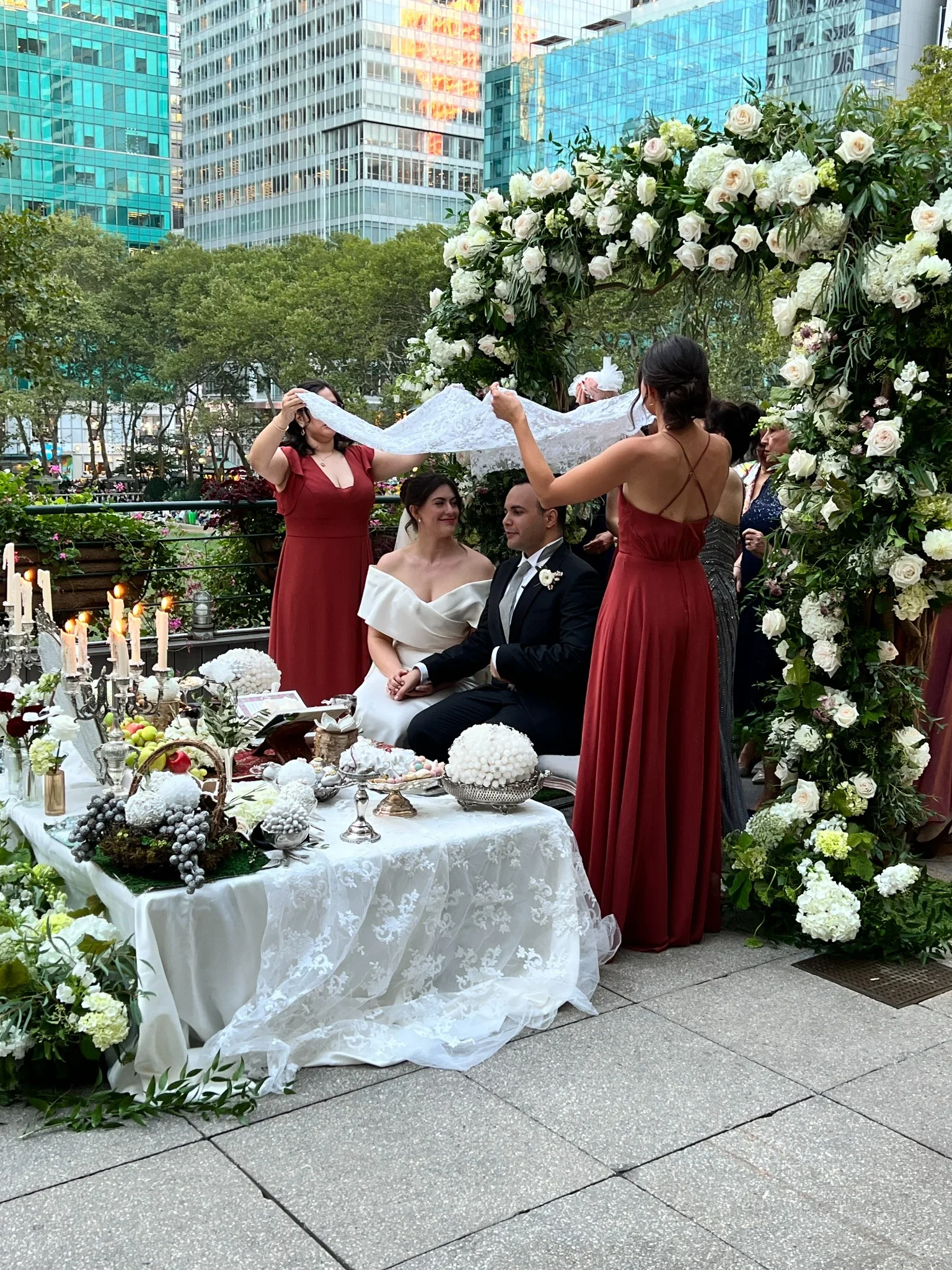
Relatives and friends hold a fine cloth above the seated couple. Two sugar cones—kalleh ghand—are rubbed together over the cloth, sending a dusting of sugar onto it as a wish for sweetness in the marriage.
The bride is asked for consent
In the familiar three-asking custom, she remains quiet at first while guests call out playful excuses. On the final asking she answers “baleh”—yes—and the room usually erupts.
Vows and rings follow
Modern couples commonly add Western-style vows and rings to the Aghd. This is also where bilingual or mixed-faith ceremonies can be woven in without interrupting the Persian rituals.
The couple shares honey
Each partner feeds the other a small taste of honey—traditionally from a fingertip—so married life begins with sweetness. It is a quiet, intimate ending after the laughter of the consent ritual.
Signing, blessings and celebration
Depending on the ceremony, the couple may sign documents, receive jewelry or family gifts, hear blessings, kiss, and then walk back up the aisle into cocktail hour or the aroosi.

The Sofreh Aghd: what is actually on the ceremony spread?
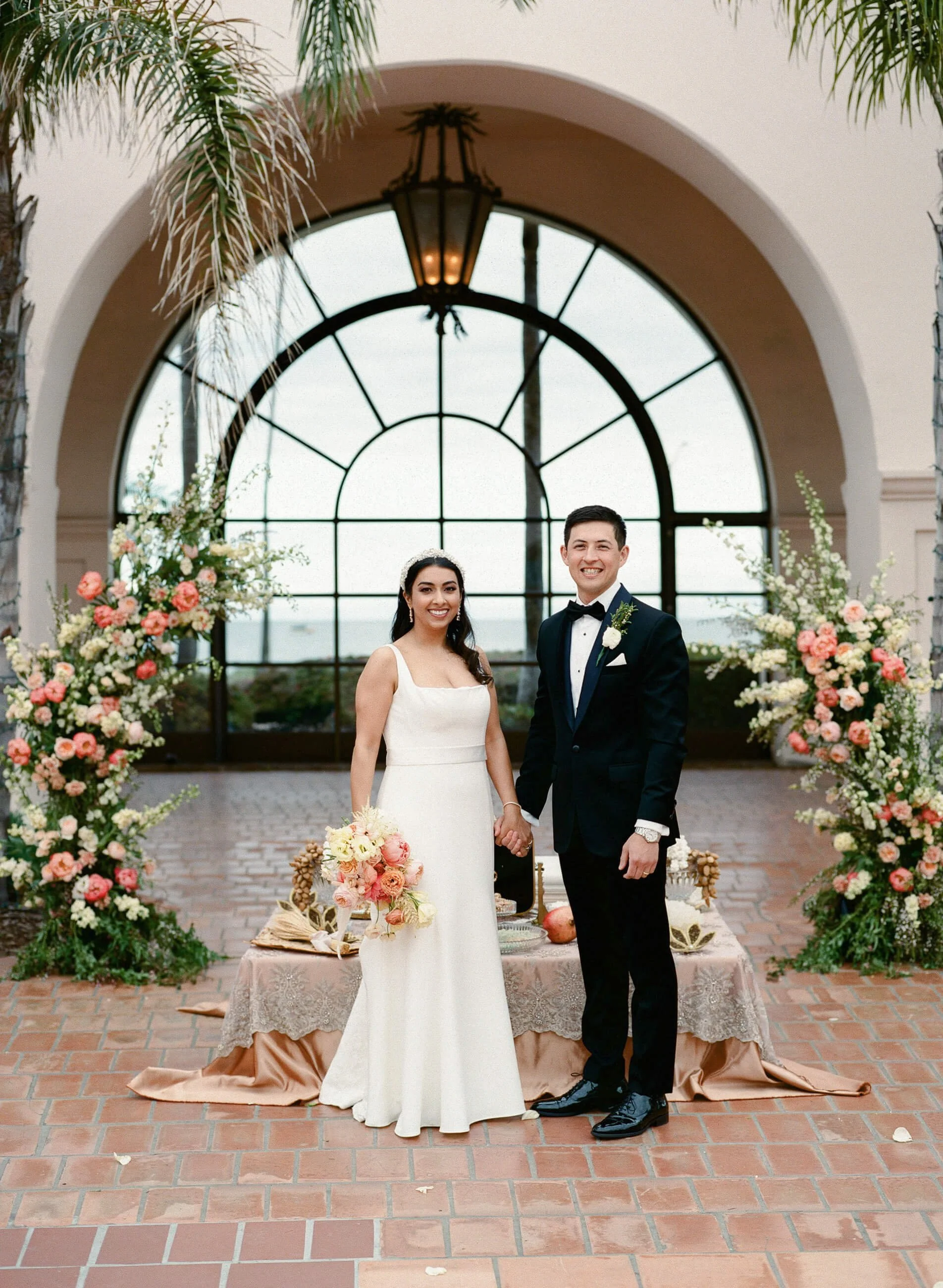
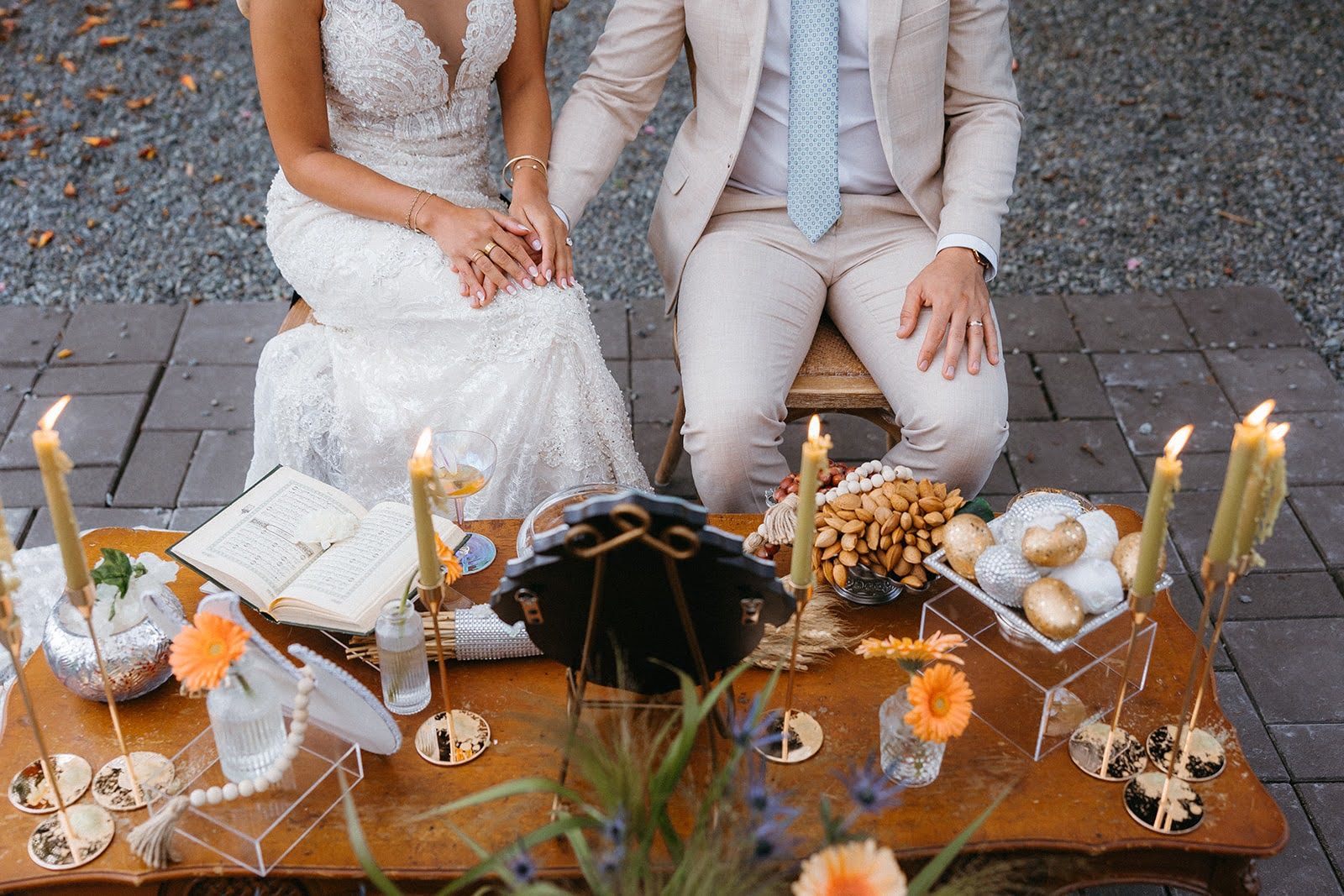
The Sofreh is not just decor. It is a collection of wishes for the marriage, translated into objects you can see, touch, smell and taste.
Families vary enormously. One Sofreh might be antique silver, Persian termeh and heirloom candlesticks; another might be acrylic, white florals and clean glass. The styling can change completely while the symbolic vocabulary stays recognizably Persian.
Mirror · Ayeneh
Light, clarity and reflection. Traditional explanations often describe the couple seeing one another in the mirror as they begin married life.
Candles · Shamdoon
Brightness, warmth and energy in the couple’s shared life. Usually placed as a pair around the mirror.
Sugar cones · Kalleh Ghand
The two hardened sugar cones used during the overhead sugar ritual, wishing sweetness onto the marriage.
Honey · Asal
Shared by the couple near the end of the Aghd so the marriage begins on a sweet note.
Bread
Abundance and sustenance. Decorative sangak or another flatbread may be arranged with herbs, cheese or calligraphy.
Herbs, fruit & nuts
Growth, fertility, health and a plentiful life. Pomegranates, apples, walnuts, almonds and herbs are common but not mandatory.
Coins
Prosperity and financial abundance for the household the couple is creating together.
Sweets · Noghl, nabat, shirini
Different forms of sugar and Persian sweets repeat the ceremony’s central wish: sweetness in the life ahead.
Rosewater · Golab
Fragrance, beauty and a sense of purity. Some families display it; others use it during the ceremony.
Esfand
Wild rue traditionally burned as protection against the evil eye and negative energy.
Termeh or fine cloth
Persian textile, often used to ground the spread visually and sometimes passed through a family.
A book chosen by the couple
Depending on the family, this might be Hafez, Shahnameh, Quran, Torah, Bible, Avesta or another meaningful text.
There is no official checklist that every Sofreh must pass. Regional background, religion, family custom and personal taste all influence what appears. An heirloom mirror from a grandmother can carry more meaning than twenty rented objects chosen because a Pinterest graphic said they were “required.”

The Persian wedding sugar ceremony: what the cloth and sugar cones mean
People sometimes search for an “Iranian sugar wedding ceremony” or “sugar ceremony Persian wedding,” but the sugar ritual is not a separate wedding. It is one of the signature rituals inside the Aghd.
A fine cloth—often lace, silk or an embroidered textile—is held over the seated couple. Family members or close friends then rub two large sugar cones together above it. The sugar falls onto the cloth rather than directly onto the couple.
The symbolism is straightforward and very Persian in its repetition: sweetness. The same idea appears again in the honey, rock candy, noghl and pastries on the Sofreh. Marriage is being wished a sweet beginning from every direction.
Who holds the sugar cloth?
Older versions of the custom often specify happily married women. Some families still care deeply about that detail. Others simply choose the women closest to the couple—sisters, cousins, aunts, bridesmaids, mothers or friends. Modern mixed-culture weddings may invite people of any gender to participate. Family expectation matters more here than an internet rule.
When does the sugar rubbing happen?
It commonly overlaps with the officiant’s reading and the consent portion of the ceremony. Some officiants cue each person to take a turn; others let the ritual continue quietly while the script proceeds. If several relatives are participating, assign the order beforehand. Otherwise a beautiful tradition can turn into six people whispering “am I next?” directly behind the couple.

Why is the Persian bride asked three times?
This is the moment that turns a formal ceremony into something unmistakably Persian: the officiant asks for the bride’s consent, and she does not immediately answer.
In the version most diaspora guests recognize, the groom answers readily. The bride is then asked if she agrees to the marriage. Silence. Someone calls out an excuse—often that aroos rafteh gol bechineh, “the bride has gone to pick flowers.” She is asked again. Another excuse comes from the crowd. The third time, she finally answers baleh: yes.
The room usually knows what is coming, which is exactly why it works. Older relatives wait for the familiar joke; non-Persian guests realize they are allowed to laugh; the groom plays along. Then the bride says yes and the energy changes instantly.
Not every couple follows the custom exactly. Some brides answer on the first asking. Some officiants write new excuses tailored to the couple. In a same-sex or nontraditional ceremony, the structure can be adapted or omitted. The tradition is recognizable because of the rhythm—not because there is one mandatory script.


Honey, rings and the final minutes of the Aghd
After the loudest part of the ceremony comes one of the smallest gestures. A bowl or cup of honey is brought to the couple. Each person dips a fingertip—often the pinky—into it and feeds the other.
The meaning is the same one carried by the sugar cones: sweetness in the life they are beginning together. There is no speech required. It is a tiny ritual that reads immediately even to a guest who has never attended an Iranian wedding ceremony.
Modern Persian wedding Aghds often place Western-style vows and rings immediately before or after the honey. Some couples sign a marriage document at the Sofreh. Family members may then present jewelry, envelopes or blessings before the officiant announces the marriage and the couple kisses.
That flexibility is one reason the Aghd works so well in diaspora weddings. It has a strong visual and ritual structure, but enough open space to add the couple’s own words.


Persian wedding ceremony words guests may hear
You do not need to speak Farsi to follow an Aghd, but a few words make the ceremony easier to understand—especially if the officiant switches between Persian and English.
A traditional Persian wedding ceremony does not have to be religious
Persian is a cultural identity, not a single religious identity. Across Los Angeles, Orange County, the Bay Area, Toronto, London, New York and other diaspora communities, Aghd ceremonies are held by Muslim, Jewish, Zoroastrian, Christian, secular and mixed-faith families.
That diversity shows up most clearly in the ceremony text and the book placed on the Sofreh. One couple may use the Quran; another Hafez; another the Torah, Bible or Avesta; another may use only poetry and personal vows. Some families prefer a traditional Persian officiant. Others ask a bilingual relative or celebrant to lead the ceremony.
Persian + Western ceremony
This is probably the easiest fusion. The couple walks down a conventional aisle, sits at the Sofreh for the Aghd, exchanges personal vows and rings, then returns to a familiar pronouncement and recessional.
Persian + Jewish ceremony
Persian-Jewish families may combine a Sofreh Aghd with a chuppah, ketubah signing, Jewish blessings and breaking of the glass. The Persian and Jewish elements do not need to compete; both traditions already place family, ritual objects and marriage symbolism at the center.
Persian + Indian or another cultural tradition
For multi-day weddings, the Aghd can stand as its own ceremony. For a single-day timeline, couples often choose a few unmistakable Persian rituals—Sofreh, sugar, baleh, honey—and weave them into the other ceremony rather than trying to perform two complete scripts back to back.
The best fusion ceremonies are edited, not diluted. Keep the rituals each family would genuinely miss if they were absent, then give those moments enough time to land.


How to plan an Aghd that feels polished instead of chaotic
Decide what kind of ceremony it is before hiring the officiant. Is the Aghd the legal ceremony? A secular Persian ceremony? Religious? Bilingual? One half of a fusion ceremony? The script becomes much easier once that question is settled.
Build the Sofreh early enough to photograph it empty. Once guests sit down and family surrounds the couple, there is no clean view of the spread. Ask the planner and photographer to protect ten or fifteen minutes before guest arrival for detail photographs.
Assign the sugar-cloth people in advance. Decide who holds the corners, who rubs the sugar cones, and in what order. If your family follows a specific rule about who participates, settle it before rehearsal—not while the bride is already sitting at the Sofreh.
Tell the officiant how much translation you want. Translating every sentence twice can make a thirty-minute ceremony feel endless. Many diaspora couples use English for guest-facing explanations and Farsi for the emotional or traditional lines.
Do not over-explain the symbolism aloud. Guests do not need a spoken inventory of fifteen Sofreh objects while they stare at fifteen Sofreh objects. Put the detailed meanings in a ceremony program or wedding website. During the Aghd, explain only what guests need in order to understand the action happening in front of them.
Mic the officiant properly. The bride’s final “baleh” is one of the biggest reactions of the day. Make sure guests can actually hear the question and answer. If the ceremony is outdoors, wind protection matters.
Give the photographer the sequence. Sugar rubbing, the bride’s answer and honey can happen within minutes. A photographer who knows the order can position for faces and reactions rather than discovering each ritual after it has already happened.
A strong Persian wedding ceremony is not impressive because it contains the maximum number of traditions. It works because the family understands why the chosen rituals are there, the guests can follow what is happening, and the couple still sounds like themselves.
Persian wedding ceremony FAQs
What happens during a Persian wedding ceremony?
The Persian wedding ceremony is called the Aghd. The couple sits before the Sofreh Aghd while an officiant leads the ceremony. Common moments include the bride’s consent ritual, the sugar cloth and sugar cones, vows or readings, rings, honey and family blessings.
What is an Aghd ceremony?
Aghd is the Persian marriage ceremony. Historically it is the marriage-contract ceremony. In modern diaspora weddings it may be legal, religious, cultural, symbolic or combined with a Western or interfaith ceremony.
What is a Sofreh Aghd ceremony?
Strictly speaking, Sofreh Aghd is the ceremonial spread, while Aghd is the ceremony itself. The couple sits in front of the Sofreh, which is arranged with symbolic items such as a mirror, candles, sugar, honey, bread, fruit, nuts, coins and a meaningful book.
What is the Iranian sugar wedding ceremony?
The phrase usually refers to the sugar-rubbing ritual within the Aghd. A cloth is held above the couple while two sugar cones are rubbed together over it, symbolically showering the marriage with sweetness.
Why is the Persian bride asked three times?
In a widely practiced tradition, the bride stays silent during the first two requests for consent while guests make playful excuses—often saying she has gone to pick flowers. On the third asking she answers “baleh,” meaning yes.
How long is a Persian wedding ceremony?
Many modern diaspora Aghds run about 20 to 45 minutes. A bilingual ceremony with poetry, personal vows, family blessings or another faith tradition can take closer to an hour.
Does the sugar go on the bride and groom?
Usually no. The sugar cones are rubbed above a cloth held over the couple, and the sugar falls onto the cloth. The gesture is symbolic rather than a literal sugar shower onto their hair and clothing.
Are Persian wedding ceremonies religious?
Not necessarily. Persian wedding traditions are practiced by secular, Muslim, Jewish, Zoroastrian, Christian and mixed-faith families. The officiant, readings and book on the Sofreh can reflect the couple’s own beliefs.
Can a Persian Aghd be combined with a Western ceremony?
Yes. Many Persian diaspora couples use a Western processional and personal vows, then sit at the Sofreh for the consent, sugar and honey rituals. Others hold the Aghd as a separate ceremony earlier in the day.