
A Traditional Persian Wedding, From the First Yes to the Last Dance
A traditional Persian wedding in the diaspora is not defined by one dress, one religious rite or one fixed checklist. Its recognizable heart is the aghd—the marriage ceremony in front of the sofreh aghd—surrounded by family rituals that can begin weeks before and continue well into the reception.
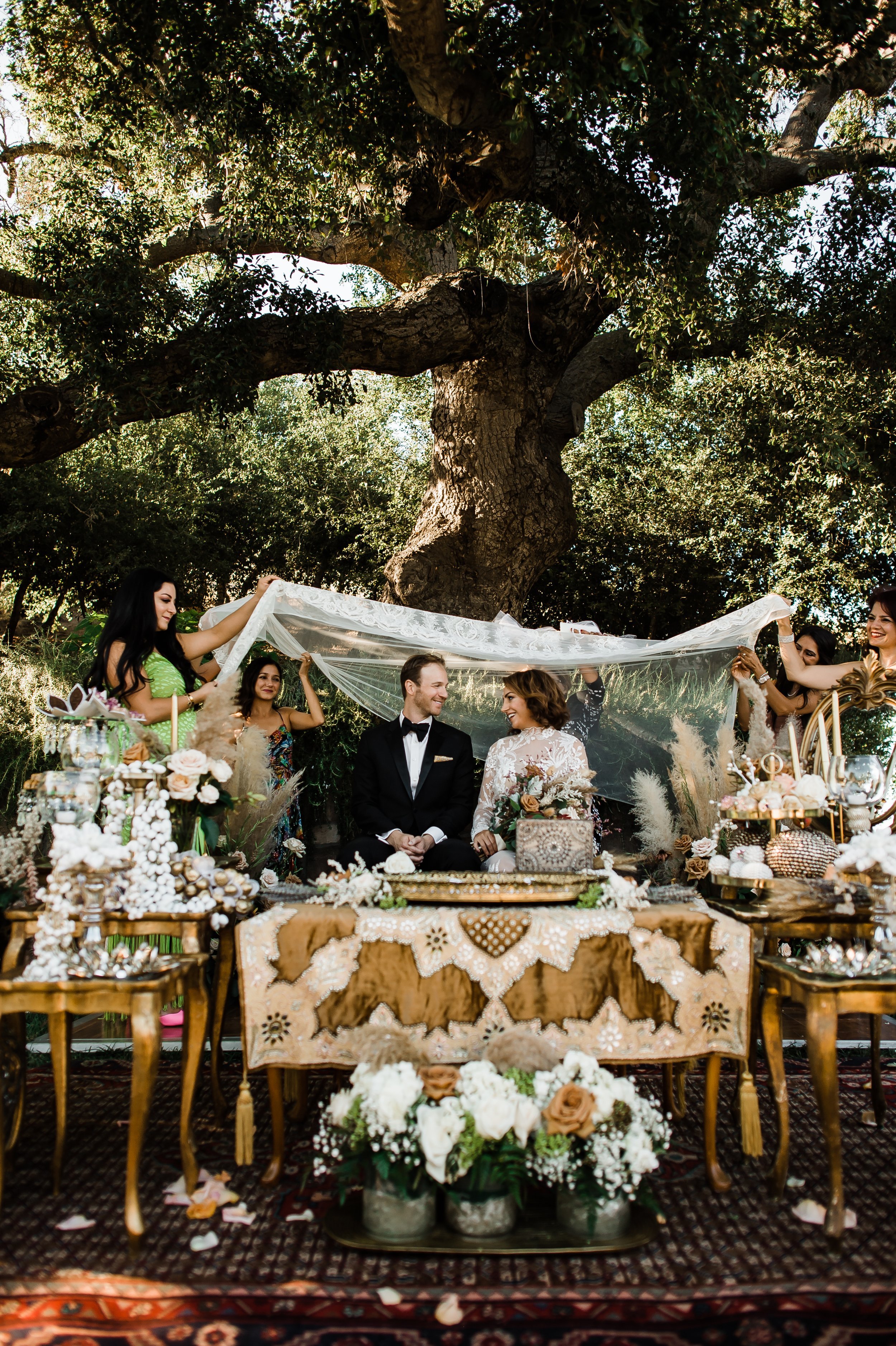
A traditional Persian wedding brings the couple and two families together through a formal marriage ceremony rich in symbols of light, sweetness, prosperity, fertility and protection—then turns the rest of the night into a celebration.
What makes a wedding traditionally Persian?
The clearest answer is not the ballroom, the menu or even the music. It is the structure of the marriage ceremony and the family customs around it.
In Persian, aghd refers to the marriage contract and ceremony. Aroosi refers to the wedding celebration that follows. Today those events are often held on the same day, especially in the United States, Canada and Europe. In other families they remain separate: a smaller aghd may make the marriage official, while the large aroosi happens weeks or months later.
The most recognizable setting is the sofreh aghd, a carefully arranged spread of symbolic objects placed before the couple. The objects vary, but the ideas repeat: brightness for the future, sweetness in married life, nourishment, abundance, fertility, prosperity and protection.
Persian vs. Iranian: English-language wedding planning often uses the terms interchangeably. “Persian” describes the Persian cultural and linguistic tradition; “Iranian” is broader and also includes the many ethnic, regional and religious communities of Iran. A traditional Iranian wedding can therefore look very different from one family to another.
That flexibility is important. There is no single master version of a traditional Persian wedding. A secular Iranian-American couple in Los Angeles may keep the mirror, candles, sugar cloth and honey ritual their families know, while using English vows, Persian poetry and a nonreligious officiant. Persian Jewish, Zoroastrian, Christian, Muslim and mixed-faith families may preserve the same ceremonial language while shaping the readings and officiation around their own background.
The wedding can begin long before the wedding day
Older descriptions of Iranian marriage show a long sequence of family visits, negotiations and celebrations. Modern couples often simplify the process, but the names still come up constantly in Persian families.
Khastegari — the family proposal
Traditionally, the groom’s family visits the bride’s family, often bringing flowers or sweets. Tea is served and the two families formally discuss the match. For couples who have already been dating for years, khastegari may be more ceremonial than decisive—but many families still want the moment.
Bale Boroon — making the “yes” official
Bale boroon is the gathering where the families formally acknowledge the engagement and traditionally settle practical details. Depending on the family, the wedding date, gifts and financial arrangements may be discussed here.
Namzadi and Shirini Khoran — engagement and sweets
Some families hold a separate engagement celebration. “Shirini khoran” literally evokes eating sweets, and that is exactly the tone: relatives gather, tea and pastries come out, gifts may be exchanged and the engagement becomes public family news.
Hana Bandan — henna night, in families that keep it
Henna-night traditions exist in Iran but vary strongly by region and family. They are less universal in contemporary Persian weddings than the aghd and sofreh, so it is better understood as an optional family or regional custom rather than a requirement.
Aghd and Aroosi — marriage, then celebration
The aghd is the legal or ceremonial union; the aroosi is the festive wedding celebration. They may happen back-to-back or on completely different dates.


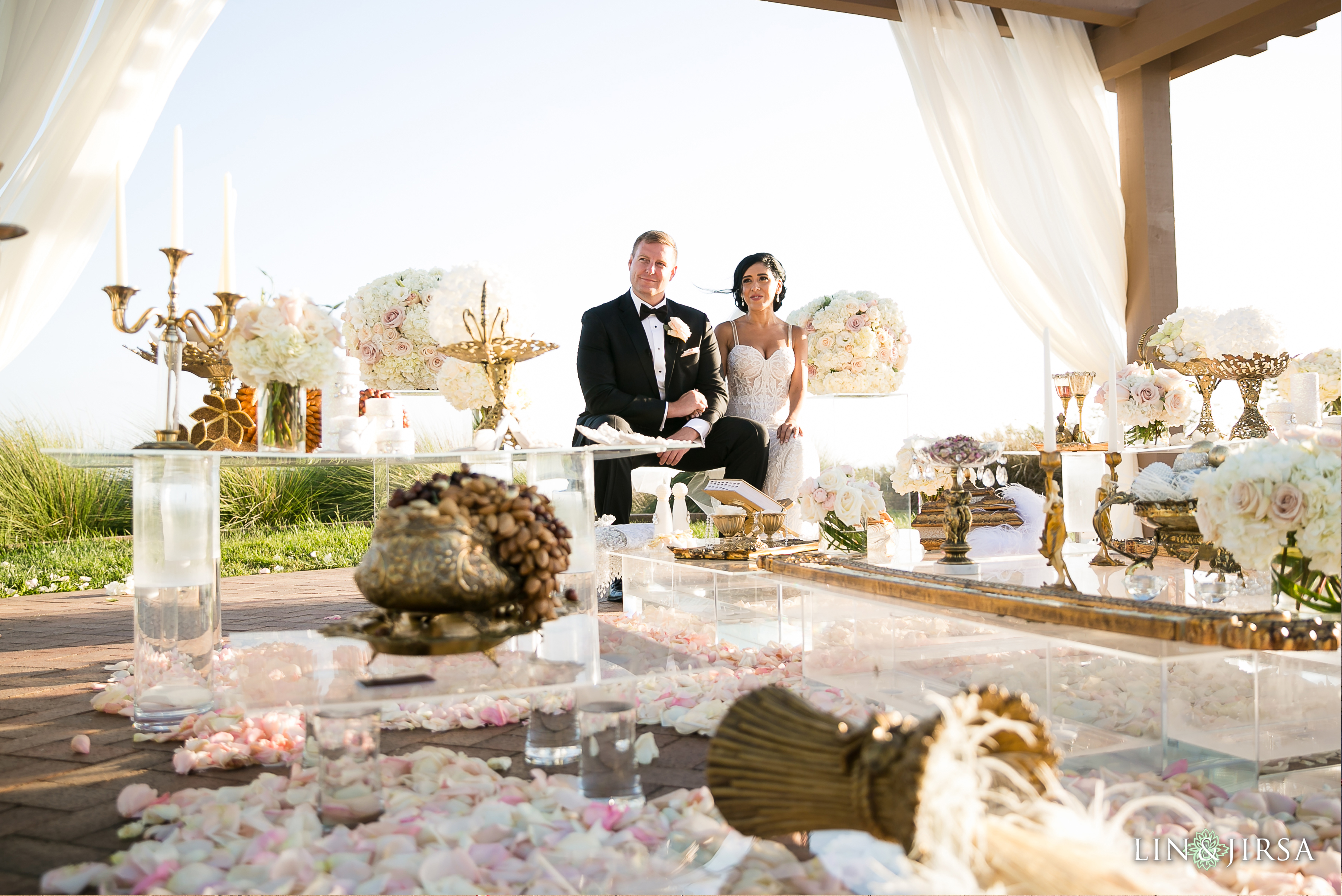
The sofreh aghd: the visual heart of the ceremony
If a guest remembers one image from a traditional Persian wedding, it is usually this: the couple seated together, a mirror and candles in front of them, family gathered close, and a white cloth held above their heads.
Sofreh means a spread or cloth, and aghd is the marriage ceremony. Historically the arrangement was laid on the floor over a textile or carpet. Contemporary sofreh designers may elevate it on low platforms, acrylic plinths or mirrored tables, but the vocabulary of objects is immediately recognizable.
Families also personalize it. Many secular diaspora couples place the poetry of Hafez or another meaningful book on the sofreh. Jewish, Zoroastrian, Christian and Muslim Persian families may instead include scripture or ceremonial text from their own tradition. There is no rule that every sofreh must use the same book.
Ayeneh & shamdoon · Mirror and candles
Light, clarity and a bright future. In one familiar custom, the groom sees the bride reflected in the mirror.
Noon-e sangak · Bread
Nourishment and prosperity. Decorative bread may be paired with feta cheese and fresh herbs.
Tokhmeh morgh · Decorated eggs
A traditional symbol of fertility and continuity.
Nuts · Almonds, walnuts, hazelnuts
Abundance, fertility and a well-provisioned life.
Khoncheh · Herbs and spices
A symbolic assortment associated with protection and warding away the evil eye.
Sekkeh · Coins
Material prosperity and financial abundance.
Shirini, noghl & nabat · Sweets
Different forms of sweetness for the couple’s new life—and, practically, something beautiful to share.
Asal · Honey
Used near the end of the aghd when the couple feeds one another a taste of honey.
Golab · Rosewater
Fragrance, freshness and blessing.
Esfand · Wild rue
Burned or displayed as a protective element against the evil eye.
Fruit
Often apples, pomegranates or other seasonal fruit, representing joy and a fruitful life.
A meaningful book
Scripture or Persian poetry chosen to reflect the family’s religious background or personal values.
Do not worry if a family’s sofreh is missing an item on this list or contains something different. Sofreh aghd customs are living traditions, not a museum inventory.


How the Persian aghd ceremony unfolds
Exact order changes by officiant and family, but the emotional rhythm is remarkably consistent: arrival, consent, blessings, sweetness and celebration.
- The couple takes their place at the sofrehThe groom may be seated first, with the bride entering afterward. They sit together facing the spread, family and guests close enough to see the symbolic objects.
- The mirror becomes part of the first lookIn a traditional version of the custom, the bride enters veiled and the groom’s first view of her face is in the ayeneh—the mirror at the head of the sofreh.
- The tooreh ghand is held overheadFemale relatives or friends hold a fine cloth above the couple while sugar cones are rubbed together over it. The falling sugar is a wish for sweetness in the marriage.
- The bride’s “yes” gets its own momentA beloved custom has the officiant ask for the bride’s consent more than once. Before the final answer, relatives may joke that she has gone to pick flowers or is otherwise unavailable. The room waits for the eventual “baleh”—yes.
- Rings, signatures and family blessings followDepending on the legal and religious setting, the couple may sign marriage documents, exchange rings, receive gifts or hear readings and blessings from relatives.
- Honey closes the ceremony on a sweet noteThe couple traditionally dips a finger into honey and feeds it to one another, an intimate symbol of the sweetness they hope to bring into married life.
That mix of seriousness and warmth is one reason the aghd translates so well into modern weddings. It can sit inside a Western-style ceremony timeline without losing its Persian identity.
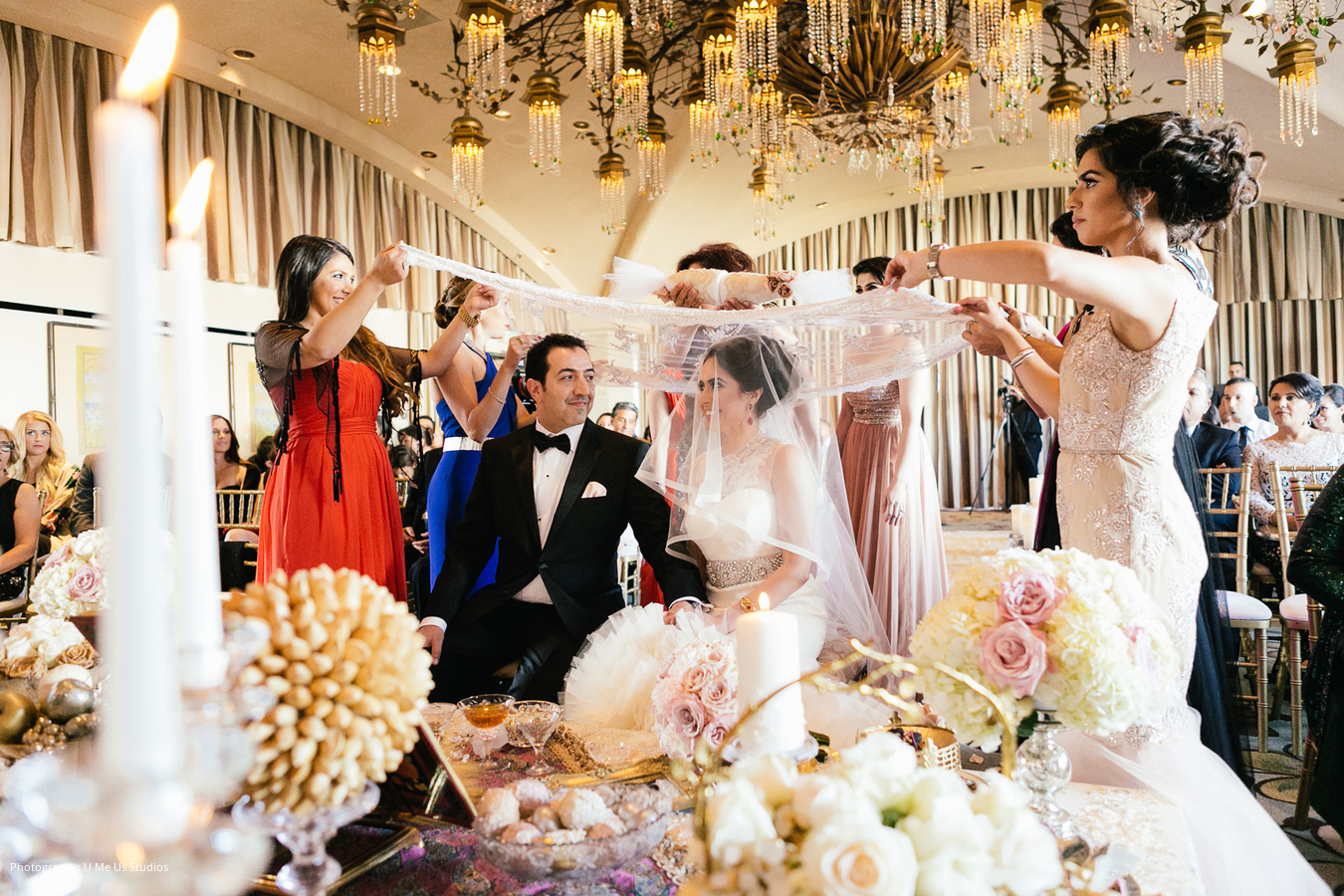

What does a traditional Persian bride wear?
Search for a “traditional Persian bride” and you may expect a single national costume. Contemporary Persian weddings are not that simple.
Across Persian weddings in Los Angeles, the Bay Area, Toronto, London and other diaspora communities, a white bridal gown and veil are the norm. The Persian identity of the wedding is usually expressed more strongly through the sofreh, ceremony, jewelry, family heirlooms, music and rituals than through a distinct dress silhouette.
Historical accounts describe different bridal colors and veiling customs, including red or pink veils in some periods and regions. Iran’s ethnic communities also have their own traditional clothing. A Qashqai, Kurdish, Azeri, Baluchi or Bakhtiari wedding may include dress traditions that are specifically regional rather than simply “Persian.”
For a modern bride who wants the wedding to feel rooted in heritage, meaningful details often work better than costume: a family necklace, an heirloom mirror on the sofreh, termeh textile, Persian calligraphy, a grandmother’s jewelry or a ceremony reading chosen by the family.
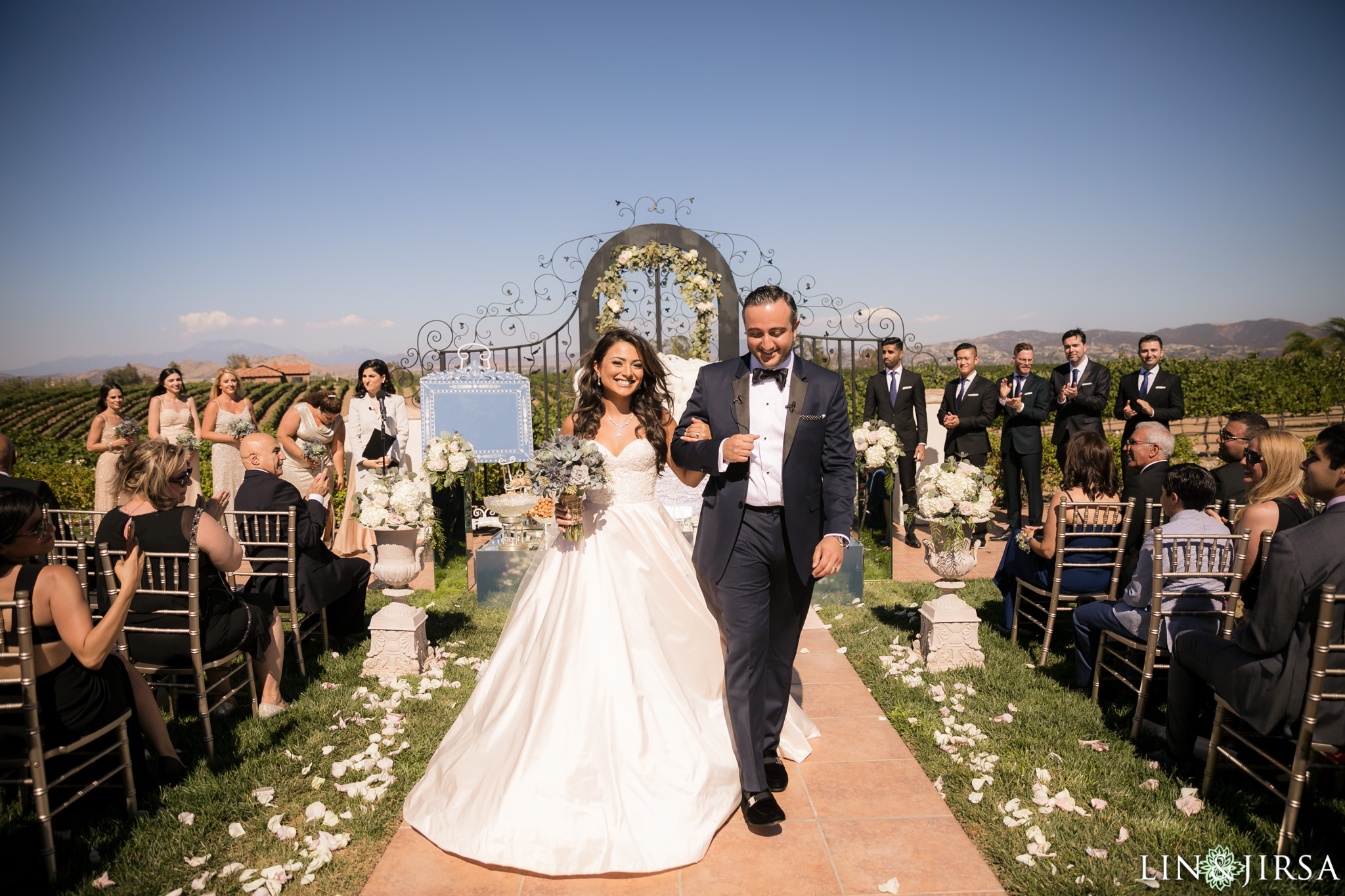

Then comes the aroosi: dinner, music and a very full dance floor
If the aghd carries the symbolism, the aroosi carries the volume. Persian wedding receptions are known for long dinners, generous hospitality and dancing that can begin with the couple’s entrance and keep going late into the night.
The menu depends on region, venue and family taste, but rice dishes, kebabs, lamb, chicken and Persian stews are familiar territory. Large fruit displays, tea and sweets often remain part of the hospitality even when the rest of the menu is contemporary.
The knife dance
At many Persian receptions, cutting the cake becomes a performance. A guest takes the cake knife and dances with it, teasing the couple before surrendering it—usually after receiving money or a playful “payment.” Another guest may steal it next and continue the dance. The details vary, but the point is not the knife; it is the excuse to turn a simple cake cutting into a room-wide joke.
Persian music is rarely one-note
A traditional Iranian wedding reception can move from nostalgic Persian classics to 6/8 dance records, Bandari, contemporary Persian pop and international open-format music. Families often span multiple generations and decades of migration, so the best dance floors are built around shared recognition rather than one narrow era.
Why two traditional Persian weddings in the diaspora can look completely different
Persian families in the diaspora are culturally, religiously and generationally diverse, and many weddings also join two different backgrounds. The core wedding language survives because it adapts.
| Family background | What may change | What may stay recognizably Persian |
|---|---|---|
| Secular | Poetry, personal readings and bilingual vows may replace formal religious text. | Sofreh aghd, mirror, candles, sugar cloth, honey, family participation. |
| Jewish Persian | Jewish marriage elements such as a ketubah, blessings and breaking of the glass can be integrated. | Persian sofreh aesthetics, music, family customs and Iranian food culture may remain prominent. |
| Zoroastrian | Zoroastrian prayers and the Avesta may shape the religious portion. | Light, fire and other traditional symbolic elements fit naturally within the ceremony. |
| Christian Persian | A church service or Christian readings may frame the marriage. | Families may still preserve Persian pre-wedding gatherings, sofreh traditions and aroosi customs. |
| Muslim | Quranic verses, an Islamic marriage formula and religious officiation may be included. | Traditional sofreh symbolism and Persian family customs around consent and celebration. |
| Mixed-culture | The timeline may combine two ceremonies, two sets of vows or two cultural rituals. | The sofreh often becomes the clearest visual anchor for the Persian side of the wedding. |
This is why rigid claims such as “every Persian wedding does X” are usually a warning sign. Families choose, omit and reinterpret traditions constantly.


How to keep a modern diaspora Persian wedding genuinely traditional
You do not need to recreate a nineteenth-century ceremony. The strongest modern Persian weddings preserve the parts that carry meaning and let the styling evolve.
Start with family memory. Before building a checklist from the internet, ask parents and grandparents what happened at their weddings. The answer may reveal customs, heirlooms, foods or phrases that matter more to your family than anything on a generic list.
Build the sofreh around meaning, not props. A minimal white sofreh can be just as traditional as an elaborate antique one if the symbolic objects are chosen deliberately. If an heirloom mirror, candlesticks or textile exists, give it a place of honor.
Choose the officiant and ceremony language early. Decide whether the aghd will be religious, secular, bilingual or part of another ceremony. That choice affects the readings, contract, timing and what guests need explained.
Explain without turning the wedding into a lecture. A short program, ceremony card or tasteful note at the sofreh can tell non-Persian guests what the sugar, honey and mirror mean. During the ceremony itself, let the rituals breathe.
Protect the family moments in the timeline. The sugar ritual, the bride’s yes, honey, ring exchange and family blessings happen quickly. Give photographers, videographers, planners and the DJ the correct order before the wedding day.
A traditional Persian wedding works because the culture is not confined to a decorative table. It lives in the participation: the relatives holding the sugar cloth, the voices waiting for the bride’s answer, the person guarding the cake knife, the music every generation recognizes and the families gathered close enough to be part of it.
Traditional Persian wedding FAQs
What happens at a traditional Persian wedding?
A traditional Persian wedding usually centers on the aghd, the marriage ceremony held in front of a sofreh aghd, followed by the aroosi or reception. Earlier family events may include khastegari, bale boroon, engagement gatherings and, in some families, henna night.
What is a sofreh aghd?
The sofreh aghd is the ceremonial spread in front of which the couple sits. It commonly includes a mirror, candles, bread, herbs and spices, fruit, nuts, decorated eggs, sweets, honey, rosewater, coins and a religious or literary book chosen by the couple.
Why is the Persian bride asked three times?
In a widely practiced custom, the officiant asks for the bride’s consent more than once. Family members may jokingly say she is out picking flowers before she finally says “baleh” (yes). The ritual is playful, but the dramatic center of it is the bride’s consent.
What does a traditional Persian bride wear?
There is no single required Persian bridal costume. Across the diaspora, most contemporary Persian brides wear a white gown and veil. Cultural identity often appears through family jewelry, heirlooms, Persian textiles and the wedding ceremony itself.
Are Persian weddings religious?
They can be, but not all follow one religion. Persian wedding customs are practiced by Muslim, Jewish, Zoroastrian, Christian, secular and mixed-faith families, so the officiant, marriage text and book on the sofreh can differ.
Are the aghd and aroosi always on the same day?
No. Some couples hold the aghd and aroosi back-to-back. Others become officially married at an intimate aghd and hold the large wedding celebration later. Both patterns are common.