
The Persian Wedding Reception: Where the Aroosi Becomes a Party
The ceremony may be the most symbolic part of a Persian wedding. The reception is where the room changes completely. Music gets louder, generations meet on the dance floor, dinner stretches into dancing, and the cake knife may disappear just when you need it.
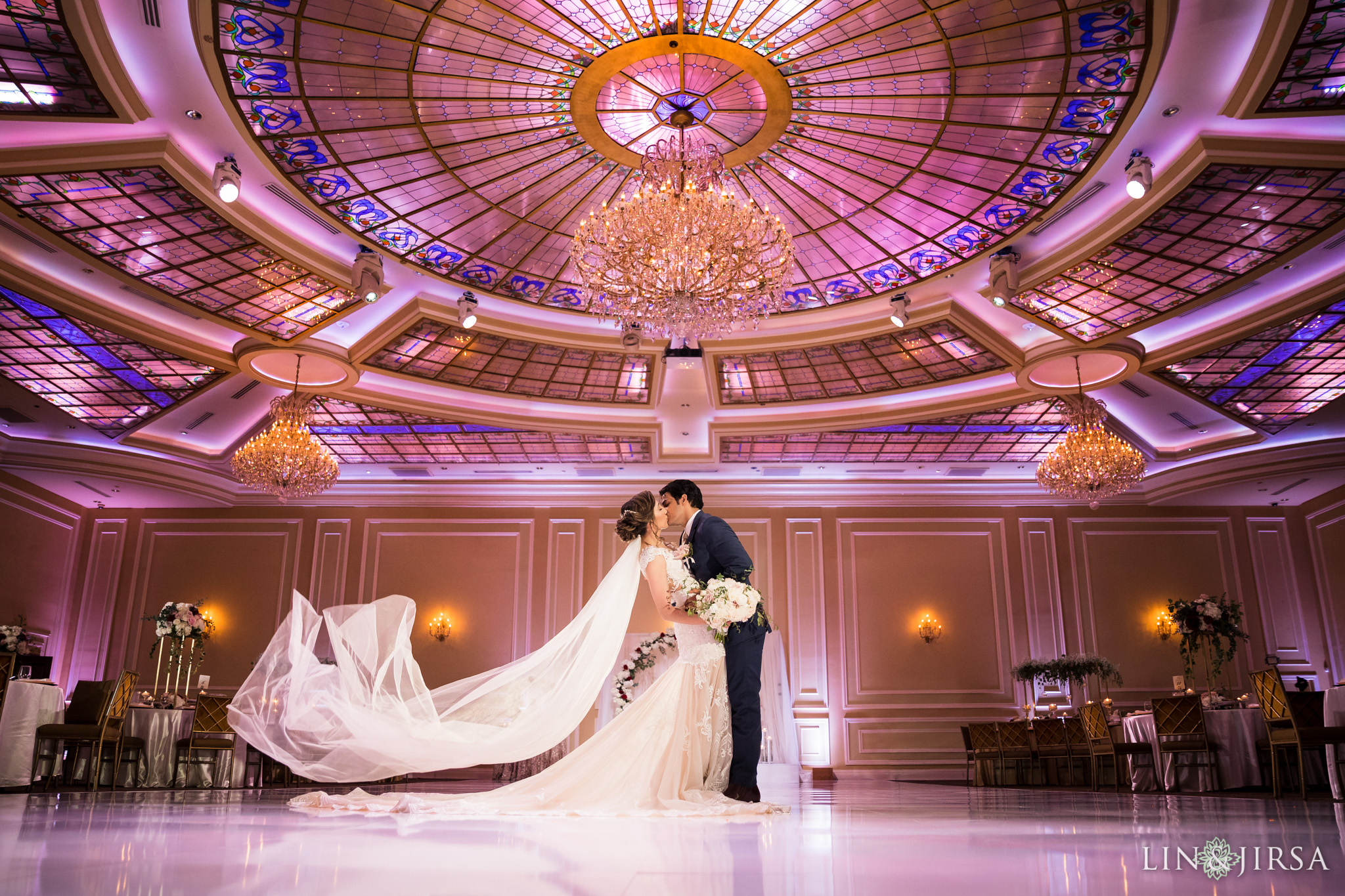
A Persian wedding party is not one rigid sequence of traditions. It is the celebratory half of the wedding — the aroosi — and in the diaspora it usually blends Persian music, family rituals and a very social dance floor with the structure of a modern Western reception.
What is a Persian wedding reception?
The Persian wedding reception is the aroosi: the celebration that follows the Aghd ceremony. Historically, those two parts of the wedding could happen on different days. At many Persian-American, Persian-Canadian and other diaspora weddings today, they happen back-to-back in the same venue.
That distinction matters because the mood is intentionally different. The Aghd centers on the couple, their families, the marriage contract and the Sofreh Aghd. The reception turns outward. Guests eat, toast, dance, circulate between tables and crowd around the couple. It is less about watching a ceremony and more about participating in the celebration.
If someone searches for a Persian wedding party or an Iranian wedding party, this is usually what they mean: a formal evening that can look polished and black-tie at dinner, then become loud, communal and extremely dance-heavy an hour later.
Aghd vs. aroosi: the Aghd is the marriage ceremony. The aroosi is the wedding celebration or reception. They are related, but they are not the same thing.
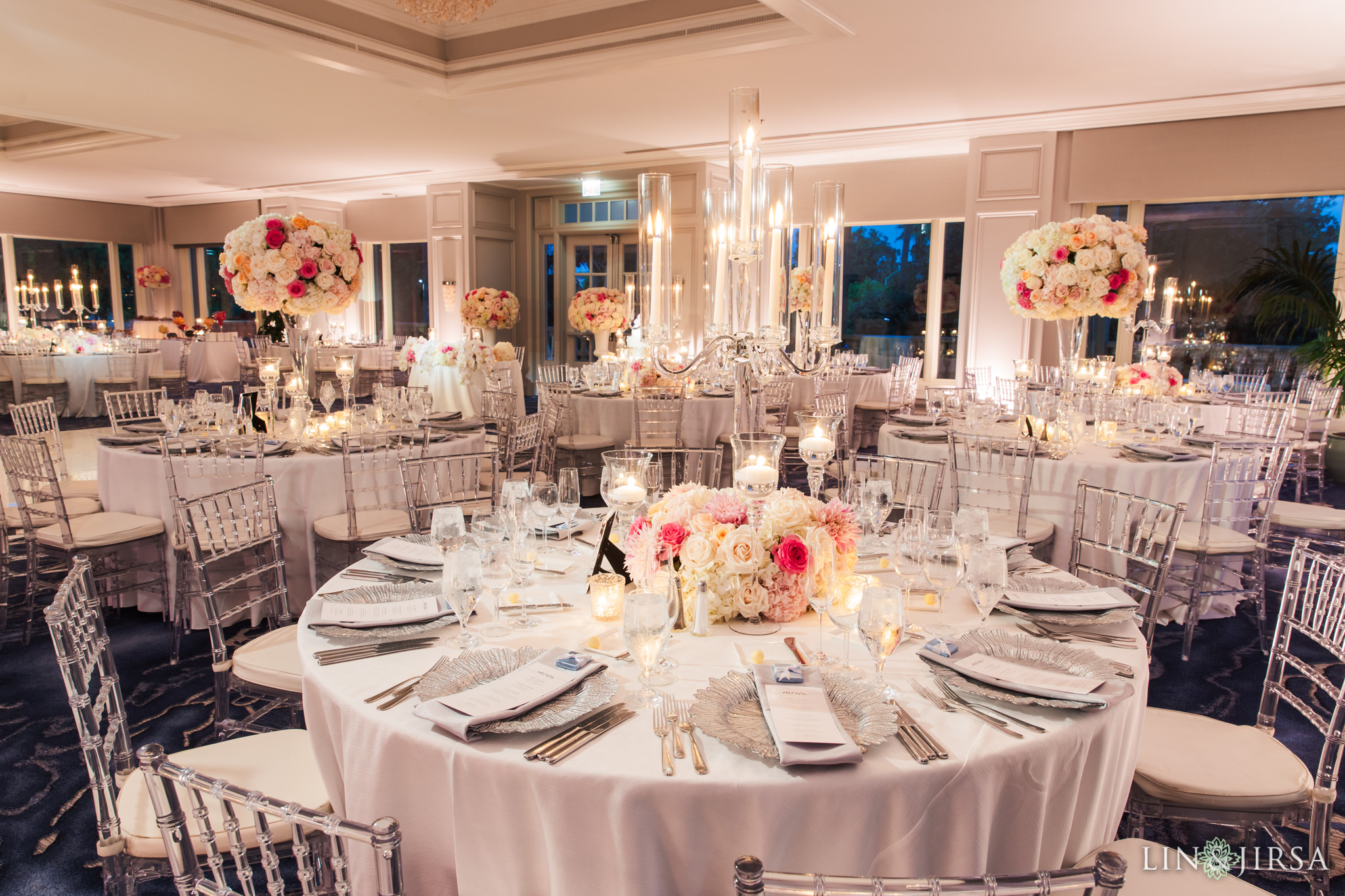

How a modern Persian wedding party usually flows
There is no official reception script, and families arrange the night differently. Still, most diaspora receptions follow a recognizable rhythm. The important word is rhythm: Persian weddings tend to work best when dinner, speeches and formal moments do not keep shutting down a dance floor that has finally come alive.
Cocktail hour
Guests move from the Aghd into drinks, hors d’oeuvres and conversation while the couple takes family photos or changes rooms.
Grand entrance
The newlyweds enter to music — sometimes directly onto the dance floor — with guests clapping, cheering and often surrounding them immediately.
First dance & family dances
The couple may go straight into a first dance, followed by parent dances, or save the formal dances until after dinner.
Dinner & toasts
Plated, buffet or family-style service depends on the venue and family. Speeches are usually worked into the meal rather than treated as a separate ceremony.
Open dance floor
This is the heart of the aroosi. Persian classics, 6/8, Bandari, current pop and international music often move in and out of one another all night.
Knife dance & cake
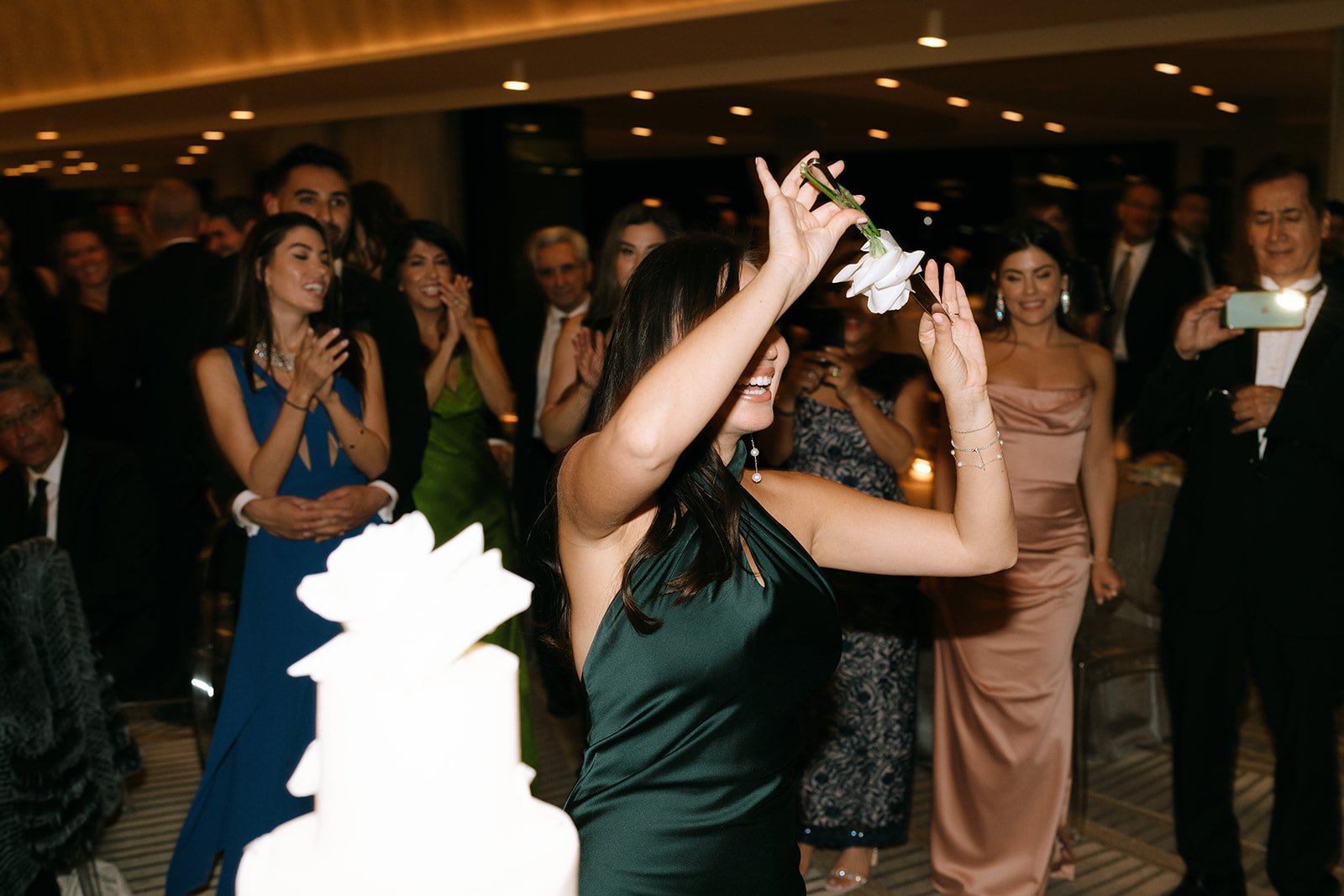
Before the cake can be cut, someone may steal the knife and turn the moment into its own mini performance.
Back to dancing
At a strong Persian reception, cake is not the ending. It is usually a short pause before the floor fills again.
The entrance sets the tone immediately
A Persian grand entrance often feels less like a walk to a sweetheart table and more like the first dance set.
Couples may enter to a favorite Persian record, a high-energy pop track, live percussion or a combination of DJ and musicians. In some families, guests form a circle around the newlyweds as soon as they enter. In others, the couple makes a lap of the room before landing on the dance floor.
The best entrances are short enough that the energy does not stall. A long introduction of every bridesmaid, groomsman, cousin and title can flatten a room that was ready to celebrate. Persian crowds usually do not need much encouragement once the couple is in the room.

The dance floor is the center of the reception
You can decorate a Persian wedding beautifully, serve an excellent dinner and book a spectacular room. If the music misses the family, people will remember that first.
Persian wedding music is rarely one genre. A good reception can move from older favorites that pull parents and aunts onto the floor into modern Persian pop, then into 6/8, Bandari and whatever international music fits the couple’s crowd. For one family that might mean house and hip-hop. For another it might include Arabic, Armenian, Latin, Israeli or Turkish records.
The older generation may react immediately to Ebi, Googoosh, Shahram Shabpareh or Morteza. Younger guests may want newer Persian records and Western club music. The trick is not creating a “Persian set” and an “American set” as if two different weddings are taking turns. The room feels better when the music moves naturally between generations and cultures.
Persian classics
Familiar records give parents and older relatives a reason to join early instead of waiting for “their” part of the night.
6/8
The unmistakable Persian dance pulse that can turn a seated ballroom into a circle around the couple very quickly.
Bandari
A high-energy staple at many receptions, often used when the room is already warmed up and ready to move.
Modern Persian pop
Current records keep the reception connected to the couple’s generation rather than treating Persian music as nostalgia only.
Open-format music
House, pop, hip-hop, R&B and other international music usually matter at diaspora weddings with mixed guest lists.
Live musicians
Drummers, singers, violin, sax or percussion can work beautifully when they add to the DJ rather than constantly interrupting the floor.


Raghseh Chaghoo: the Persian wedding knife dance
Just when the couple is ready to cut the cake, the knife may suddenly belong to somebody else.
Raghseh Chaghoo — literally the knife dance — is one of the most recognizable Persian wedding reception traditions. A friend or relative takes the cake-cutting knife and dances with it instead of handing it to the couple. The groom or couple offers money, the dancer teases them, and sometimes the knife is passed to another guest so the game continues.
Despite how often it appears at modern weddings, the knife dance should not be presented as an ancient Persian marriage rite. It is better understood as a playful reception custom that has become especially popular in contemporary Persian weddings and diaspora celebrations.
There is also no requirement that only women dance with the knife, although female relatives and bridesmaids are common. Some families make the exchange elaborate; others do one quick dance and hand the knife over. The whole point is entertainment, not a strict rulebook.
How to make the knife dance actually fun
- Tell the DJ and photographer roughly when it is happening so the room is ready rather than confused.
- Choose one or two people who can actually carry the moment instead of passing the knife through ten reluctant guests.
- Keep the music energetic and let the dancer control the timing.
- Have cash or the agreed “bribe” ready so the bit does not die while someone searches for a wallet.
- Once the knife is won, cut the cake quickly and get the party moving again.

What is served at a Persian wedding reception?
There is no single required Persian wedding menu. In Los Angeles, Toronto, New York, Vancouver or London, you might attend an aroosi with a full Persian buffet, a hotel-plated steak-and-fish dinner, Mediterranean food, or a menu that combines two family backgrounds.
When couples do serve a recognizably Persian menu, common wedding choices include kebabs, saffron rice, baghali polo, zereshk polo, tahdig, khoresh, salads, herbs, yogurt dishes, Persian tea, fruit and sweets. Large spreads work especially well because Persian wedding hospitality tends to favor abundance over minimalism.
The pacing matters more than whether every dish is Persian. A slow three-course dinner can consume two hours of prime party time. If the couple’s priority is dancing, service needs to be designed around that from the beginning.
For a mixed-culture reception, the menu is one of the easiest places to represent both families without forcing every tradition into the ceremony.
First dance, parent dances and speeches
Persian receptions often borrow the formal structure of an American or Canadian wedding, but the room rarely stays formal for long.
A first dance may be to a Persian love song, an English-language record, or something personal that has nothing to do with culture. Parent dances are common, especially at diaspora weddings, and can be quiet or choreographed. A father-daughter dance may suddenly turn upbeat; a first dance may end with the entire family joining halfway through.
Speeches also vary. Some families keep them short and move quickly back to music. Others include parents, siblings, best friends and multiple languages. If several people need to speak, splitting toasts between dinner courses usually works better than stopping the reception for one long block.


What makes a modern diaspora reception feel Persian?
It is usually not one costume, one song or one “traditional” moment. The identity comes from the whole room: the language spoken at the tables, the music older relatives know by the first two beats, the way guests surround the couple, the amount of family participation, and the expectation that people will actually dance.
That is why a Persian-American wedding party can still feel deeply Persian even if dinner is plated filet, the couple’s first dance is in English, and half the guest list is not Iranian. Culture is not a checklist.
Persian-Jewish weddings may add a hora and Hebrew or Israeli music. Persian-Armenian weddings may move between Persian and Armenian dance music. Mixed Persian-Arab, Persian-Indian, Persian-Turkish and Persian-Western receptions often have the same challenge: fitting two families into one night without making the party feel like alternating cultural demonstrations.
The strongest receptions treat the guest list as one room. Traditions are explained when necessary, but they are not over-explained. Music changes naturally. The couple decides which customs actually belong to them.

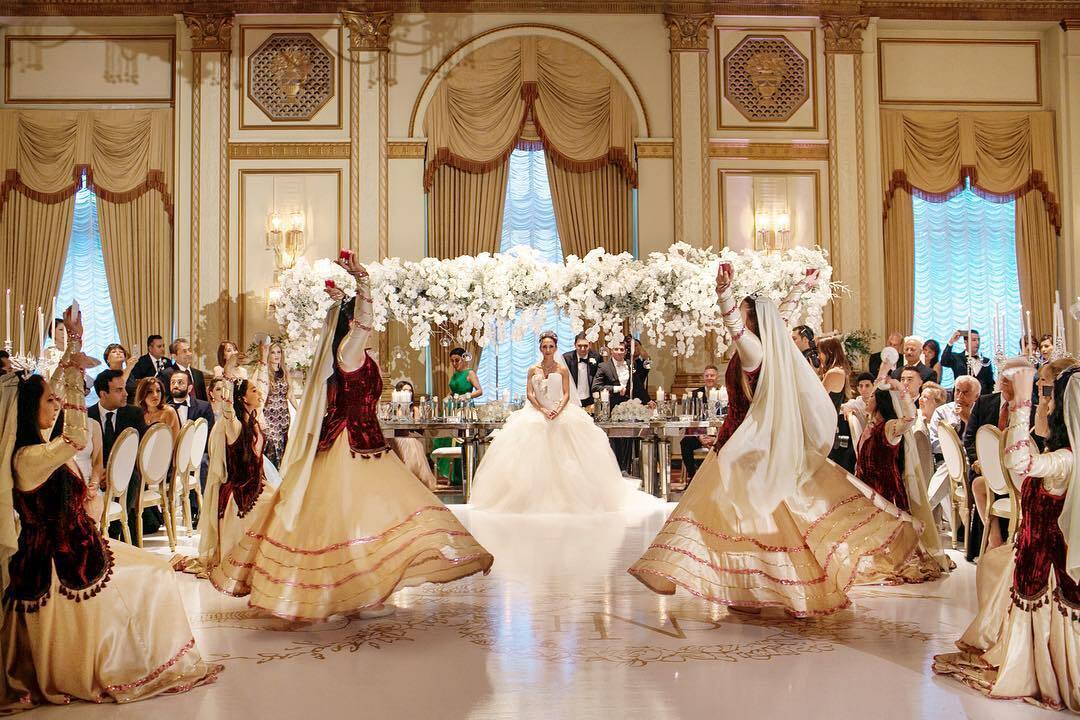
How to plan a Persian reception that actually moves
The most common reception mistake is not cultural. It is logistical: too many interruptions between the moments people actually came to enjoy.
A Persian crowd can give you an incredible dance floor, but it still needs room to build momentum. If the entrance is followed by a 25-minute speech block, then salad, then another speech, then a photo presentation, then the first dance, you are asking guests to restart the party five times.
Protect the dance floor
Once dancing starts, give it a real window. Forty uninterrupted minutes is more valuable than four ten-minute bursts scattered around the night.
Make sure the DJ understands Persian music beyond a playlist
Knowing five famous songs is not the same as knowing how to move between generations. Ask how the DJ handles 6/8, older Persian requests, newer pop and the non-Persian parts of your guest list.
Tell the MC what should be bilingual
Not every announcement needs to happen twice. Decide which moments older relatives genuinely need in Farsi and which can be handled once, clearly.
Leave space around the couple
Persian dancing often forms circles. A tiny dance floor that works on a generic capacity chart can feel cramped once fifty people want to surround the newlyweds.
Plan for a later finish if the venue allows it
Persian wedding parties are often evening events and can run late. If dancing matters, check hard stop times, overtime rates, sound restrictions and last-call rules before signing the venue contract.
| Reception moment | What to decide before the wedding |
|---|---|
| Grand entrance | Song, introduction style, live musicians or effects, and whether the couple goes straight into dancing. |
| First dance | Full song or shortened edit; Persian, English or another language; whether family joins at the end. |
| Open dancing | Persian-to-international music balance, must-plays, do-not-plays and family favorites. |
| Knife dance | Who starts with the knife, what song is used and how long the bit should run. |
| Dinner | Plated vs. buffet, Persian vs. fusion menu, and how long service will interrupt the floor. |
| Speeches | Who speaks, language, rough length and whether to split them between courses. |
| Late night | Venue hard stop, DJ overtime, bar closing time and whether late-night food is needed. |
For the cultural side of the day before the party begins, see our guides to the Persian wedding ceremony and a broader traditional Persian wedding.

Questions people actually ask
What happens at a Persian wedding reception?
A modern Persian wedding reception usually includes a grand entrance, first dance, dinner and speeches, a long open dance floor with Persian and international music, the Persian knife dance before cake cutting, and more dancing afterward. The exact sequence varies by family.
What is a Persian wedding party called?
The celebratory wedding party is commonly called the aroosi or jashn-e aroosi. Historically it follows the Aghd, the marriage-contract ceremony. Many diaspora couples now hold the Aghd and aroosi on the same day.
What music is played at an Iranian wedding party?
Most modern Iranian wedding parties mix Persian classics, newer Persian pop, 6/8, Bandari and Western or international music. The exact mix depends heavily on the families and guest list.
What is the sugar ceremony at the reception?
The sugar-cone ritual belongs to the Aghd ceremony, not the reception. Married women or family members grind sugar cones above the couple beneath a cloth during the Sofreh Aghd. The reception tradition people often confuse with it is the knife dance before cake cutting.
What is the Persian wedding knife dance?
Raghseh Chaghoo is a playful cake-cutting tradition. A friend or relative dances with the cake knife, and the couple usually offers money or a gift to win it back. The knife may be passed to another dancer before the couple finally gets it.
How long does a Persian wedding reception last?
There is no fixed length, but many modern Persian wedding parties run around five to six hours and often continue past midnight when the venue allows. Dinner style, speeches and the amount of dancing can change the timeline significantly.
Do Persian weddings have a first dance?
Many diaspora Persian weddings do. The couple may choose a Persian song, an English-language song or any record that is personal to them. Parent dances are also common.
What should guests wear to a Persian wedding reception?
Most Persian wedding receptions are formal or cocktail-to-black-tie events, especially in hotel ballrooms and luxury venues. Guests often dress quite glamorously, but the invitation’s stated dress code should always win.